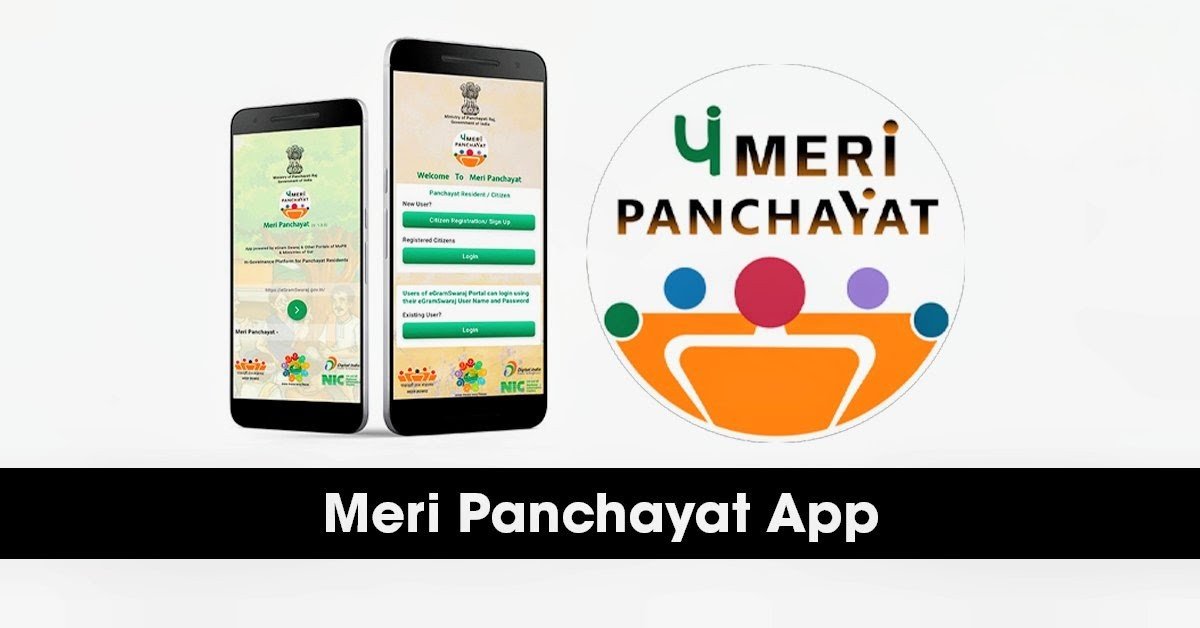
In recent years, the Government of India has made concerted efforts to harness digital technology for strengthening grassroots democracy and governance. Among such initiatives, the Meri Panchayat mobile application stands out as a landmark effort to connect citizens with their local Panchayats (village councils) in a transparent, accountable, and participatory manner. This article explores the origins, core features, benefits, challenges, and future potential of Meri Panchayat.
—
Background and Rationale
The Panchayati Raj system in India is intended to be the bedrock of local self-governance, enabling villages to plan, implement, and monitor development projects suited to local needs. However, in practice, many Panchayats face challenges of opacity, limited citizen engagement, lack of real-time information, and accountability deficits. To address these gaps, the Ministry of Panchayati Raj (MoPR), along with the National Informatics Centre (NIC), launched the Meri Panchayat app as a unified mobile governance platform.
—
Key Features and Functionalities
The Meri Panchayat app integrates multiple functions and data sources to provide a holistic view of a Gram Panchayat’s operations. The following are its main features:
1. Panchayat Profile and Governance Details
Users can view details about the Panchayat — its boundaries, committees, standing committees, elected representatives, and administrative staff.
2. Financial Transparency
The app offers data on fund receipts, revenues, expenditures, balance from previous years, scheme-wise fund flows, and audit reports.
3. Development Planning & Project Monitoring
Citizens can access the Gram Panchayat Development Plan (GPDP), see the list of projects included, track their status (ongoing, completed, stalled), and monitor fund utilization over time.
4. Grievance Redressal / Complaints
One of the notable features is location-based complaint submission: users can lodge complaints tied to specific geotagged locations (e.g., for issues in roads, water supply, streetlights) and submit photographic evidence. Further, they can track the status of such complaints.
5. Public Participation & Feedback
The app encourages residents to suggest works or projects that can be included in the Panchayat’s development plan. Moreover, citizens can rate completed works, comment on quality, and review Panchayat agendas and resolutions from Gram Sabha meetings.
6. Social Audit Integration
The app supports tools and workflows for social audits — letting users view audit results, cross-verify beneficiary lists, and assess whether schemes are implemented fairly.
7. Multi-Portal Integration
Meri Panchayat is integrated with other central portals such as eGramSwaraj (for financial and planning data), Audit Online, Meeting Online, Vibrant Gram Sabha, GPDP, and others, thereby consolidating data from multiple sources.
8. Multilingual and Inclusive Interface
The app supports more than a dozen Indian languages, thereby intending to be inclusive for rural users across many states.
—
Advantages and Impacts
The Meri Panchayat app offers several potential advantages for rural governance and citizen engagement:
Enhanced Transparency and Accountability
By making finances, project details, and audit results publicly available, the app reduces opaqueness in Panchayat affairs, thereby holding elected representatives and officials accountable.
Citizen Empowerment and Participation
When citizens can propose works, provide feedback on implementation, and monitor progress, they move from passive recipients to active participants in local governance.
Improved Efficiency and Responsiveness
Automated workflows for complaint redressal and real-time monitoring can speed up responses from Panchayats and ensure that corruption or delays are minimized.
Bridging Information Gaps
In many villages, there is a “last mile” information deficit — citizens often lack access to records or have to depend on intermediaries. The app provides direct access to data and decision-making.
Digital Inclusion and Rural Connectivity
As smartphone and internet penetration increases in rural India, tools like Meri Panchayat help bring governance to the fingertips of rural citizens.
Recognition & Global Visibility
The app has already gained recognition — it won the WSIS Champion Award 2025 under the category of Cultural & Linguistic Diversity and Local Content.
Scaling Reach
The app’s coverage encompasses over 2.65 lakh Gram Panchayats, benefitting more than 95 crore rural residents and over 25 lakh elected representatives.
—
Challenges and Limitations
While the Meri Panchayat app is ambitious and promising, it faces several practical challenges:
1. Digital Literacy and Accessibility
Many rural citizens, especially women, the elderly, or marginalized groups, may lack smartphones or the digital literacy to fully use the app’s features.
2. Network Connectivity and Infrastructure
Some remote villages may have low or unreliable internet connectivity, which can hamper real-time usage of the app.
3. Data Accuracy and Timeliness
The effectiveness of the app depends on Panchayat officials regularly uploading up-to-date data. Any lag or mismatch in data entry can erode trust.
4. Capacity Building for Officials
Panchayat secretaries, functionaries, and elected representatives must be trained to use digital tools, integrate workflows, and respond to feedback.
5. Resistance to Transparency
In some cases, local vested interests or political resistance may undermine the use or full deployment of transparency features.
6. Maintenance, Usability & Bugs
Handling the technical upkeep, fixing bugs, and ensuring user-friendly interfaces across many languages is a continuous challenge.
7. Privacy & Data Security
Since sensitive details — financial, address, beneficiary data — are involved, ensuring robust security, authentication, and user privacy is essential.
—
Recommendations for Strengthening Impact
To maximize the potential of Meri Panchayat, a few key approaches can be considered:
Capacity Building and Digital Training
Conduct regular training sessions and handholding for Panchayat officials and citizens to familiarize them with app usage.
Offline & Low-Bandwidth Features
Introduce offline caching or minimal data modes so that users in low-connectivity zones can access essential features.
Promotional & Awareness Campaigns
Use door-to-door campaigns, Gram Sabhas, local media, and community groups to promote awareness of the app’s benefits and usage.
Feedback Loops and Iterative Updates
Continuously gather user feedback, monitor usage data, and iterate on design to improve usability, fix glitches, and add new features.
Incentives for Adoption
States or Panchayats that actively use and maintain data in the app might receive recognition, awards, or performance-linked grants.
Data Verification and Audits
Periodic audits and data validation must be conducted to ensure authenticity, reduce manipulation, and bolster trust.
—
Conclusion
The Meri Panchayat mobile application is a bold and timely intervention in strengthening rural democracy in India. By bringing Panchayat finances, planning, development works, grievance redressal, and citizen feedback into a unified digital interface, it promises to reshape how villages engage with governance. While challenges exist — especially in connectivity, digital literacy, and institutional adaptation — the app’s success would symbolize a substantive step toward participatory, transparent, and accountable governance at the grassroots.
